
Freeing Program Managers to Focus on Student Success
Dec 20, 2024
Lean analysis revealed that 29% of Program Manager tasks were non-value-add, diverting time from critical student engagement and retention activities. Findings informed process improvements to maximize time spent on high-impact interactions.
The Ask

The CEO and Chief Program Officer at a workforce development organization came to us after hearing that Program Managers, tasked with creating community and overall student support and retention, were highly unsatisfied with their roles and burnt out. The executive team was worried about high Program Manager turnover, as the role was key to a new business model focused on reducing overall costs while maintaining quality outcomes.
The Ask: How can we move to the new business model of Program Managers taking on double or triple student responsibility while also improving Program Manager satisfaction?
The Reframe
ASSUMPTIONS
Preliminary subject-matter-expert conversations uncovered weighty assumptions:
Based on top Program Manager performance - it was believed that Program Managers could be more efficient and coach more students. However, the organization did not know what had enabled 'top performers' to take on more coaching responsibility. Was it because they had found ways to be efficient? If so, could we replicate those? Or, were there certain responsibilities they were avoiding? If so, what was the impact?
For such an important role, we assumed that there would be defined measures for what great performance looked like. However, beyond students coached and student retention, there was not a shared, implemented rubric for what quality looked like in the role - it wasn't just about shifting responsibilities within an existing role, we would need to formally (re)define and relaunch the role, including end-to-end training for staff/management, as well as introduce a performance management approach.
MAKING THE PIVOT
How Might We: Redesign and relaunch the Program Manager role in a way that consistently creates more capacity while also increasing student and staff satisfaction and retention?


User Interviews & Process Mapping
KEY FINDINGS
The research directly indicated that in order to increase student and staff satisfaction and retention, that we needed to find a way for staff to have more 1:1 coaching time with students - especially those that were at risk or felt that they needed extra support that week.
Fortunately, the research also uncovered that there was opportunity to free up almost a full day a week for Program Managers (equivalent to 24-30 additional coaching sessions) - all we needed to do was find a way to streamline and/or eliminate administrative tasks. See more in "Pilot Design" details.


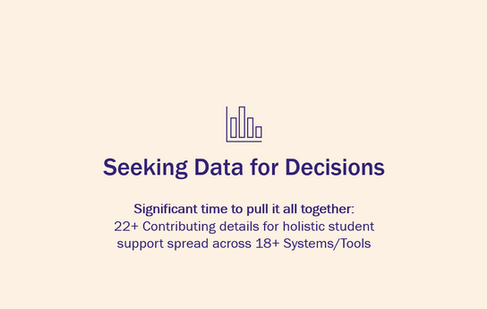


Review Full Findings Deck (See here)
Pilot Design
PILOT APPROACH SELECTION
Because the Program Manager role is an integral part of student experience/student retention, we reduced organizational risk via a pilot approach with a small set of Program Managers (and their management) so that we could co-create solutions, test, and iterate before introducing changes to the entire organization.
Additionally, in order to introduce and implement coaching standards/training and reduce administrative time for Program Managers, we implemented Program Managers as Coach (formerly, Program Managers managed 5-6 untrained coaches).
STANDARDIZED SCHEDULE
Over 110 tasks were analyzed across three roles and critiqued with pilot super users and their management to identify and proactively plan for and prevent 'waste', i.e. administrative tasks. Through iteration, the team arrived at this final viable option:


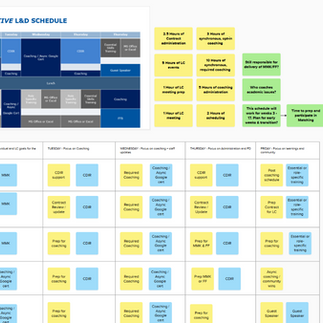


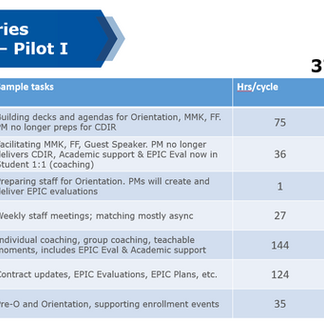


Slider Description: Image 1: Over 110 tasks shown crucial to the Program Manager role, Image 2: A draft new process flow, Image 3: A working mural board to draft schedule, Images 4-6: Lean process analysis of time per task type baseline vs improvements made in Pilot I and Pilot 2
CURRICULUM DESIGN FOR COMMUNITY BUILDING

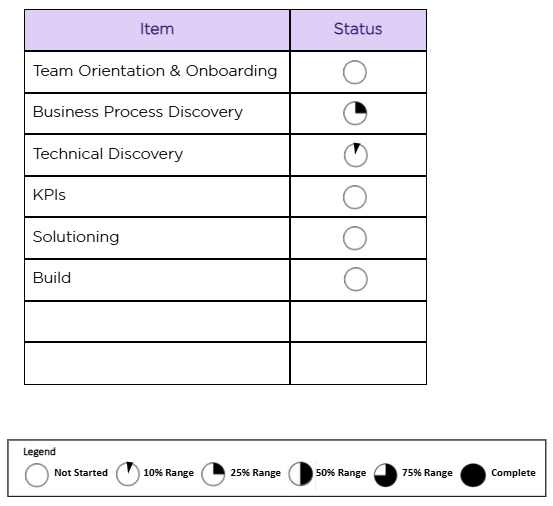

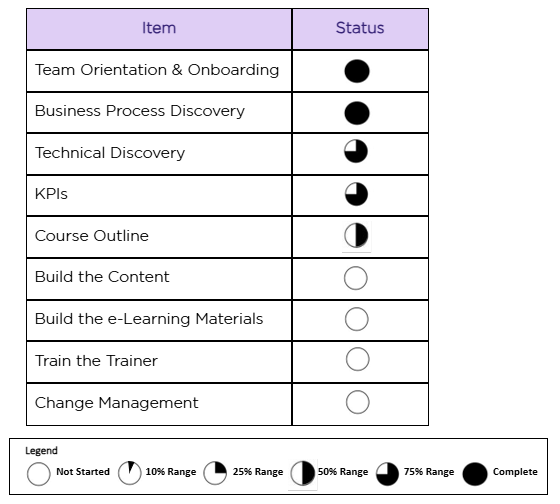

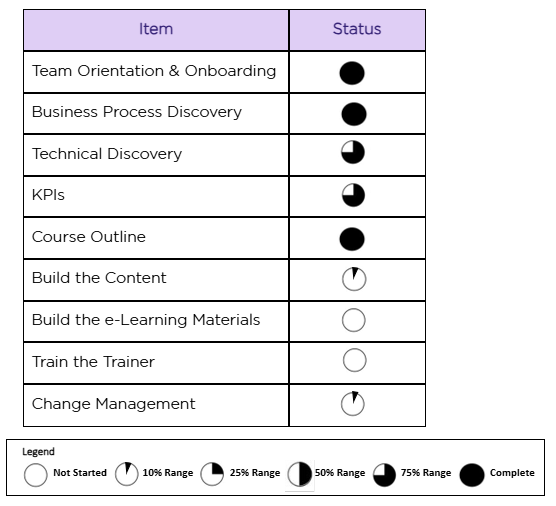

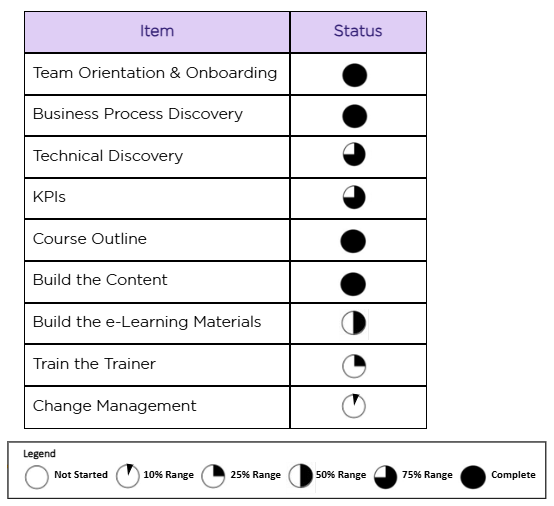
Slider Description: Progress overtime for building a standardized community building curriculum, which would save 2 hours each week per Program Manager (equivalent to 6-8 coaching sessions)
COACH TRAINING SESSIONS


Description: User Feedback following training sessions
Results
Description | Outcome | Baseline/Goal | Pilot 1 | Pilot 2 |
Program Manager as Sole Coach |  | Program Managers to coach 30-45 students | Yes | Yes |
Student Retention | | 83% (Goal) | 90% | 88% |
Increase Program Manager Satisfaction | |  3.7 out of 5 |  4.3 out of 5 |  4.5 out of 5 |
Introduce Program Manager Standards | | None (Baseline) to 70% standard adherence (Goal) | 38% adherence | 74% adherence (+18% loose adherence) |
Student Internship Performance (always or often meet requirements) | | 85% (Goal) | --- | 92% |
Reduce Non Value Add Activities & Increase Value Add | Work-in-Progress: New Goal uncovered of 'how to protect Program Manager time during organizational transformation | Non Value Add 10% (Goal) & Value Add 63% (Goal | --- | No improvement due to unplanned organizational rebrand and program transformation |